 English
 简体中文


A manlid gasket usually fails not because it was the wrong part, but because the compression it was given at installation has been consumed by the system around it.
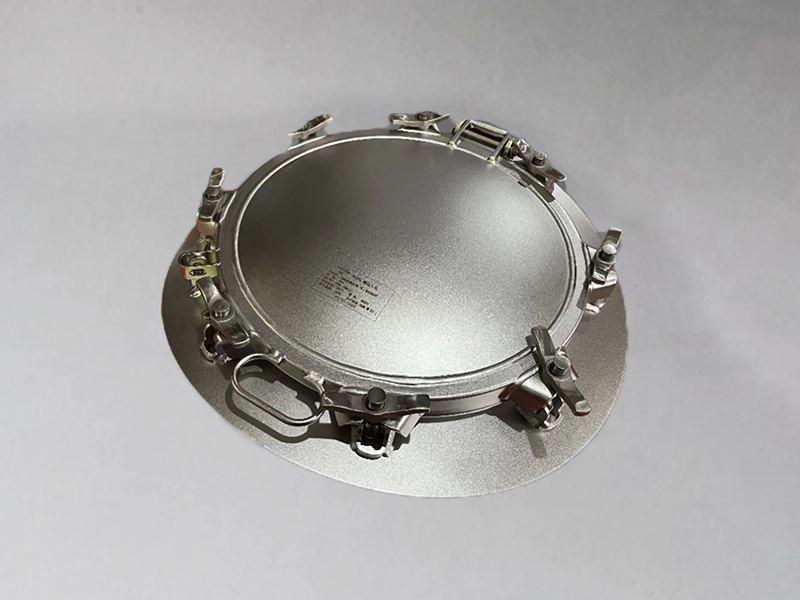
Long-term sealing depends on contact pressure, and contact pressure is set by the groove depth and width, the lid face, the bolt sequence, the service temperature and the cleaning chemistry — the gasket only works inside that budget.
01A new gasket that leaks after four months
Consider a typical depot report. A DN500 low-profile manlid is closed on eight swing bolts. The seal is new, the groove is clean, and the assembly passes a 6 bar hydrostatic test — above its 4 bar design pressure, per the hatch assembly specification. The tank enters service carrying solvent at 0.3 bar.
Hatch assembly specification: DN300 / DN500 Low Profile Manlid Inspection Hatch Assembly.
Four months later a depot inspector rejects it: a weep along one arc of the manlid.
There are two explanations. Either the seal was defective, or the compression it had on the day of the test is not the compression it has on day 120. In maintenance practice the second is far more common, and far harder to see, because nothing about a gasket looks wrong while it is installed.
That distinction is the subject here. Not “how much should a manlid gasket be compressed,” but “why does a correctly compressed gasket stop being correctly compressed.”
02A manlid gasket is a compression seal, not a pressure-energized seal
Most sealing intuition comes from O-rings and lip seals, where system pressure pushes the seal harder into the gap and helps it seal. A rectangular manlid gasket sitting in a machined groove does not work that way. There is no pressure assist. The only thing holding the interface closed is the elastic recovery of the compressed material.
So every long-term sealing question collapses into one: how much contact pressure is left?
Three terms get used interchangeably and should not be:
Table 1 — Compression, compression ratio and contact pressure: what each term can and cannot tell you
| Term | Unit | What it is | What it cannot tell you |
|---|---|---|---|
| Compression | millimetres | The absolute change in thickness | Whether the remaining thickness is doing any sealing work |
| Compression ratio | % | That change as a percentage of free thickness | Contact pressure — the ratio is geometry only |
| Contact pressure | force per unit area | The pressure actually present at the sealing interface | Cannot be read from a caliper; needs the contact band, or pressure film |
The ratio is pure geometry: free-state section height minus installed height, divided by free-state section height, times 100. Measured in millimetres; nothing else enters it.
The scale of the real parts is what makes this practical. The Super Tank Lid Seal is supplied in 14 × 12 mm, 14 × 14 mm and 14 × 10 mm sections; the PTFE braided manlid seal in 14 × 14, 10 × 14 and 10 × 15 mm. On a 14 mm section, 1 mm of measurement error is a 7% error in compression ratio. A caliper reading taken at one point is not a compression measurement; it is a guess with decimals.
Section data referenced in this guide: Super Tank Lid Seal and PTFE Braided Manlid Seal.
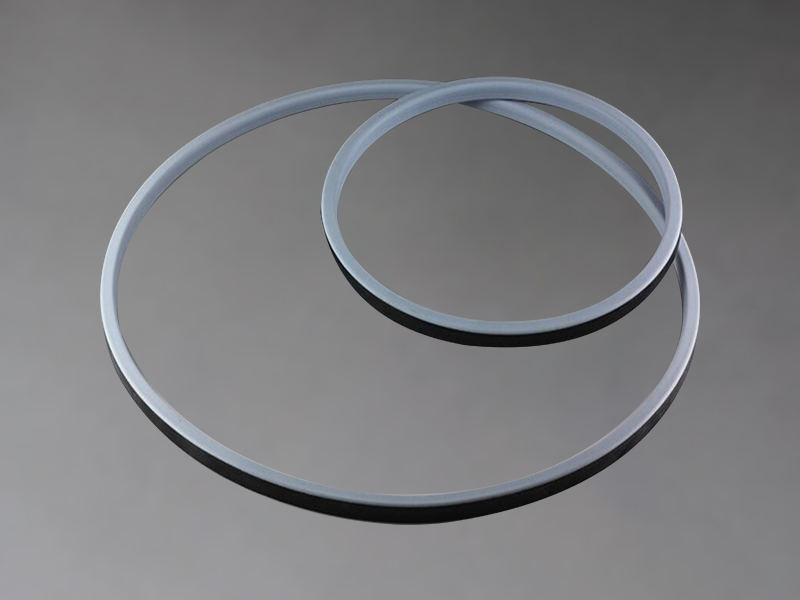
The ratio still does not give you contact pressure. Two seals at the same 20% can sit at very different pressures, because pressure depends on the material’s stress–strain curve, how much of the groove volume the seal fills, the finish of the mating surface, and temperature. Field teams rarely have pressure film. What they do have is the contact band — the witness mark left on the gasket and the lid face. Its width and continuity are the working proxy for contact pressure, and they are worth recording properly.
03Six failure patterns, and what each one actually indicts
When a manlid leaks, the gasket is the easiest thing to blame and usually the last thing that should be. The pattern of damage carries more diagnostic information than the leak itself.
Table 2 — Failure pattern, first check, what it eliminates, and the measurement that confirms it
| Observed pattern | Check first | What it rules out | Then measure |
|---|---|---|---|
| Even contact band all round; seal flat, hard, uncracked | Service temperature against the seal’s rated ceiling | Installation error and bolt sequence | Free-state thickness at eight points; pull the temperature log |
| Contact band missing or faint on one arc | Lid-face flatness and groove depth on that arc | Material quality as the primary cause | Straight edge across the sealing face; groove depth at four points |
| Band very wide; seal thinned and spread; edge nibbled | Groove width against section, and bolt torque | Under-compression | Groove width; whether material has extruded into the lid clearance |
| PTFE skin cracked or lifted; core intact | Installation method and seam position | Chemical attack of the core | Whether damage is on the top face, the ID or the seam |
| Single-point leak; seal otherwise uniform (braided type) | Butt-joint gap and cut length | Groove or lid geometry | Joint gap; fitted length against the 1625–1650 mm supplied lengths |
| Seal swollen, soft or tacky | Product and cleaning-agent compatibility | Compression as the cause | Volume change; cleaning temperature and dwell time |
Two cautions. First, one sign is not a diagnosis. A flattened seal can be heat ageing or over-compression; you separate them with free-state thickness, the temperature record and the torque record — not with the eye. Second, the most expensive misdiagnosis in this list is blaming the compound and ordering the same part again, because it converts a system problem into a repeat purchase.
04The half of the system nobody inspects
A manlid seal is one component of a sealing system, and the other components are usually inspected less rigorously than the gasket.
4.1 Groove depth
Compression is set by the groove, not by the gasket. Take a 14 mm section as an example: in an 11 mm groove it would sit at 21.4% compression; if that groove were machined or worn to 12.5 mm, the same seal would sit at 10.7% — half. You can install a perfect gasket into a worn groove and under-compress it by design. Measure depth at four points, not one.
Table 3 — The same gasket, two groove depths: compression is a property of the groove
| Groove depth | Section height | Compression ratio | What the number means |
|---|---|---|---|
| 11.0 mm | 14 mm | 21.4% | Compression as designed for this section |
| 12.5 mm | 14 mm | 10.7% | Half the intended compression; the seal is already compromised at installation |
4.2 Groove width
A 14 mm section in an 18 mm groove has somewhere to spread sideways instead of compressing upward. Width matters as much as depth and is almost never checked.
4.3 Lid face flatness
The sealing face is machined, but the lid ring is a plate closed on eight discrete swing bolts. Between bolts the plate bends. A straight edge across the face shows whether that bending has become permanent set after years of service or a single impact.
4.4 Seating and centring
A moulded ring with a fixed inner diameter — 486, 490 or 294 mm depending on size — centres itself in the groove. A braided seal arrives as straight length and is cut to fit, which means it has a butt joint: a deliberate discontinuity in the sealing line. That is not a defect. It is a design feature that has to be installed correctly, and it is the first place to look when a braided seal leaks at a single point.
4.5 Bolt load
Eight swing bolts apply load at eight points. The first bolt and the last do not see the same load, and a hand-tightened swing bolt is a different instrument from a torque wrench. Re-torquing after the first heat cycle is not optional on a system this compliant.
Put together: the same gasket, the same torque wrench, a different groove and a different tightening sequence produce two different seals. That is the system view, and it is where most “gasket quality” arguments actually belong.
05What changes between month one and month twelve
Three mechanisms run in parallel, and they are not the same thing.
Compression set is permanent thickness loss: the material does not return to its free height after unloading. Stress relaxation is loss of stress at roughly constant strain: the seal is still the same thickness but pushes back less. Set is visible with a caliper; relaxation is not. ISO 815-1 is the standard method for measuring set, and when a supplier quotes a figure, the useful question is at what temperature and for how long — a number without those conditions says almost nothing about a 110 °C product.
Method reference: ISO 815-1, Rubber, vulcanized or thermoplastic — Determination of compression set.
Thermal cycling works on the system, not just the material. Common EPDM and PTFE compounds expand several times more than carbon steel per degree — typically close to an order of magnitude, depending on the compound — so the seal moves relative to the groove on every heat-up and cool-down. Over repeated cycles that appears as fretting at the contact face and as pumping at any joint. This is also where the rating trap sits: the hatch assembly is rated from −40 °C to 250 °C, but the Super Tank Lid Seal is rated to +110 °C and the braided seal to +120 °C. The gasket is the limiting component in the assembly. A tank rated to 250 °C does not have a 250 °C seal, and running near the hatch limit ages the gasket far faster than the tank specification suggests.
Repeated opening adds a mechanical path. The PTFE skin wears against the lid face; a braided seal reseats into a slightly different position each time it is closed. Small effects individually. Neither is small after years of inspection and washdown.
Chemical exposure needs one careful reading. The Super Tank Lid Seal’s PTFE envelope is rated inert from pH 0–14, and the braided seal over the same range except for hydrofluoric acid and certain fluorine compounds. Treat that as a material rating, not a blanket statement about the whole gasket in every cleaning regime. A pH range does not describe concentration, temperature or dwell time, so confirm the specific cleaning agent with the supplier before changing material.
06Two structures, two different engineering questions
Super Tank Lid Seal, EPDM core with three-sided virgin PTFE. A rectangular EPDM core with a PTFE envelope on the top, bottom and inside diameter, moulded as a ring with a fixed inner diameter of 486, 490 or 294 mm depending on size. Rated to 4 bar, −25 to +110 °C, pH 0–14 across all IMO classes, food-grade non-tainting. It answers the higher-pressure question, in a recess sized for a 12–14 mm section.
PTFE braided manlid seal. Reinforced yarn impregnated with PTFE and an inert resin, with an optional silicone core, supplied as straight length to be cut to fit — 1625 to 1650 mm depending on size. Rated to 2 bar, −50 to +120 °C, pH 0–14 except hydrofluoric acid and certain fluorine compounds. It answers the aggressive-product, low-pressure question, and it works where the lid recess is shallow.
Table 4 — The two manlid seal constructions compared on the parameters that decide the application
| Super Tank Lid Seal | PTFE braided manlid seal | |
|---|---|---|
| Construction | EPDM core with 3-sided virgin PTFE envelope | Reinforced yarn, PTFE and inert resin impregnation; optional silicone core |
| Form supplied | Moulded ring, ID 486 / 490 / 294 mm | Straight length 1625–1650 mm, cut to fit |
| Sections | 14×12, 14×14, 14×10 mm | 14×14, 10×14, 10×15 mm |
| Tank pressure rating | 4 bar | 2 bar |
| Temperature | −25 to +110 °C | −50 to +120 °C |
| Chemical range | pH 0–14, all IMO classes, food-grade non-tainting | pH 0–14 except HF and certain fluorine compounds |
| Recess requirement | Recess sized for a 12–14 mm section | Works in shallow lid recesses |
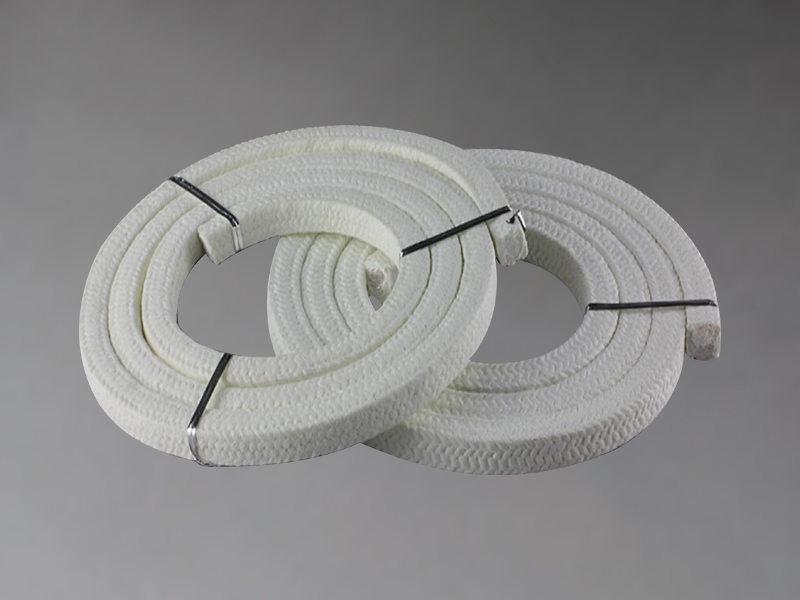
The pressure difference is the clearest reason “which is better” is the wrong question. The braided seal’s 2 bar rating follows from its construction — a compacted fibre body is less dense than a moulded elastomer core — and is not a quality ranking. At 3 bar the braided seal is the wrong part no matter how good it is. Conversely the composite seal’s 110 °C ceiling is lower than the braided seal’s 120 °C, which matters on hot product even though the composite is the higher-pressure option.
The silicone-core braided variant exists for a specific reason: the silicone core improves elasticity. That matters where the lid recess is shallow and there is limited room to develop compression. It is an engineering answer to a geometry problem, not a premium trim level.
07Turning a failed gasket into a better specification
The point of failure analysis is to change the next specification. Let the pattern drive the spec:
Table 5 — Failure pattern and the specification change it should trigger
| Repeated pattern | Verify before ordering | Specification consequence |
|---|---|---|
| Flattening and hardening | Actual service temperature against the 110 °C / 120 °C ceiling; groove depth | If temperature is the cause, the answer is a different material, not a thicker gasket |
| Swelling or softening | Product and cleaning-agent compatibility | A seal that softens in service is usually reacting to the medium, not losing compression |
| Butt-joint leaks on braided seals | Cut length and joint position | Move to a moulded ring, or specify cut length and joint position explicitly |
| Edge nibbling | Groove width and torque | The seal is being extruded, and a new seal will do the same thing |
Record enough to make that possible. Eight fields are enough:
Table 6 — The eight record fields that make a repeat failure diagnosable
| Record field | What it lets you detect |
|---|---|
| Free-state section height | The baseline for calculating set |
| Installed section height | Confirms actual compression rather than assumed compression |
| Groove depth at four points | Detects a deep or worn groove |
| Groove width | Detects lateral spread and extrusion risk |
| Service temperature range | Compared against the seal’s 110 / 120 °C ceiling |
| Product and cleaning agent | Separates chemical swelling from mechanical set |
| Number of lid openings | Tracks the mechanical wear path |
| Leak location | Maps the failure to a groove or bolt position |
Three consecutive failures with the same pattern on the same tank points to the assembly, not the part — and that conclusion is only reachable with records.
08Five questions to bring to the supplier
Bring those records to the supplier. Five questions are worth asking:
- Can you check my groove dimensions against your section?
- What is the compression behaviour of this construction rather than its hardness?
- What set data do you have at my service temperature?
- Is the material compatible with my cleaning agent as well as my product?
- Which of your constructions fits my recess depth and pressure?
Each question maps to a number the buyer already holds; none of them can be answered by a brochure.
09FAQ
What compression ratio should a manlid gasket have?
It is set by the groove, not chosen freely. Measure groove depth and section height, calculate, then confirm with the supplier that the result suits that construction. A single “recommended percentage” applied across different sections, groove widths and temperatures is not a specification.
Can over-compression cause a leak?
Yes, through extrusion and accelerated set. If the band is very wide, the seal is thinned and spread, and the edge is nibbled, the material has been squeezed into clearance it should not have entered. Check groove width against section before adding torque.
Why does a new gasket fail after a few months rather than immediately?
Because the failure is a loss of contact pressure, not of material. Set, relaxation, thermal movement and repeated opening reduce pressure gradually. A 6 bar test on day one cannot detect a trend that takes months to develop.
10Closing
A manlid gasket does not fail because it was the wrong colour or the wrong brand. It fails because the compression it was given at installation was consumed by the system around it — a groove that was too deep, a lid that was not flat, a bolt sequence that was not uniform, a temperature above the seal’s ceiling, or a cleaning agent outside the seal’s rated chemical range.
The practical conclusion is not a brand recommendation. It is that seal life is set by the compression budget the assembly gives it, and that budget is measurable: groove depth, lid flatness, bolt sequence, temperature and chemistry. A supplier can only work inside those numbers. Establishing them is the buyer’s job.
11About SUNPASS
SUNPASS Sealing Technology (Zhejiang) Co., Ltd. has manufactured tank container parts and accessories since 2000, as a wholly owned subsidiary of Tenglong Sealing Group, founded in 1979. The range covers manlid assemblies and seals, PTFE and envelop gaskets, O-rings, dust caps, thermometers, pressure gauges, swing bolts and tank container accessories, supplied to tank manufacturers, depots and logistics operators.
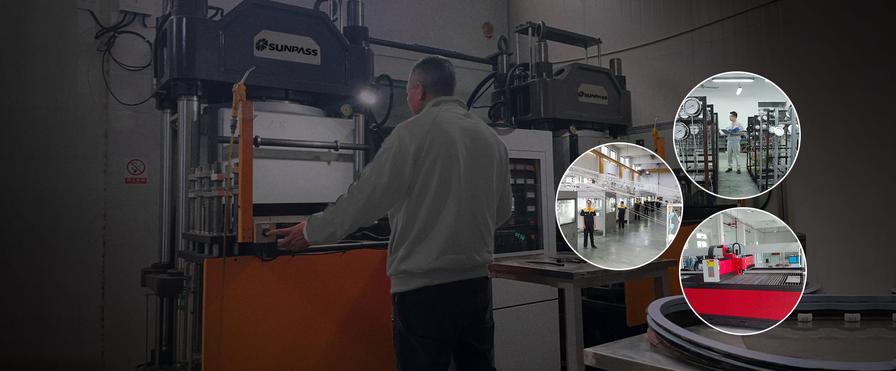
Product information and enquiries: www.sunpasssealing.com — Super Tank Lid Seal, PTFE Braided Manlid Seal, DN300 / DN500 Low Profile Manlid Assembly.


 0


 Add: No. 78 West Road Zhenxing, Lianghui Industry
Zone, Yuyao, Zhejiang, China
 Mob: +86-13757423547
 Tel: +86-574-62837603
 E-mail: chelsea@sunpass.cn